
A new way to explore
contemporary art and ideas
The politics of opacity
In contrast to demands for transparency, some artists embrace opacity as a form of protection, autonomy, and resistance.
[ KADIST ]
[ KADIST ]
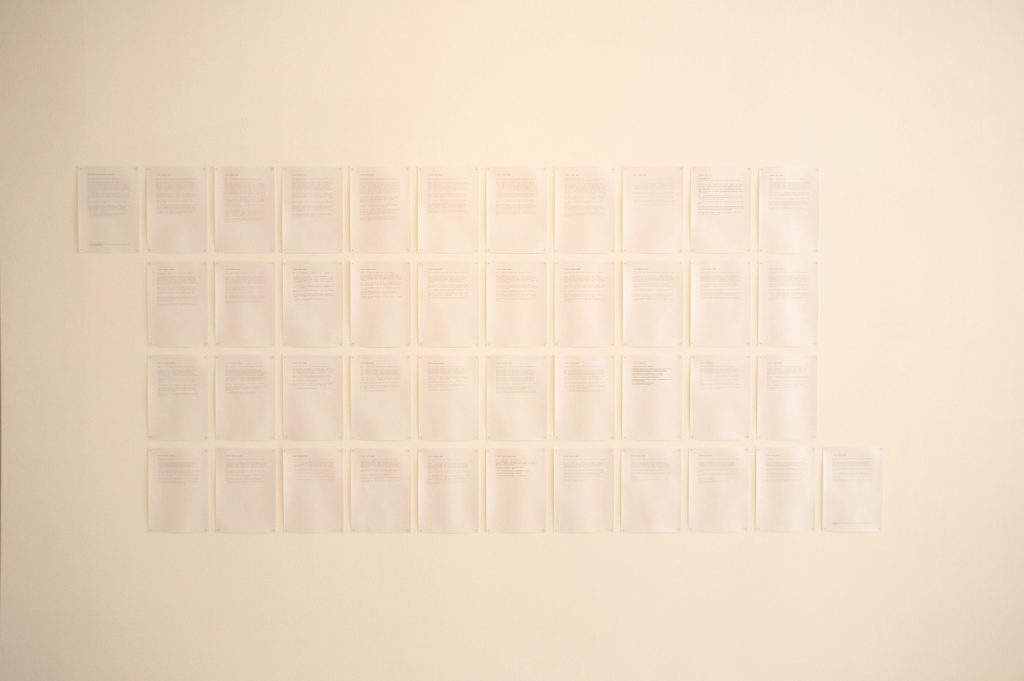
Milton Friedman on the Wonder of the Free Market Pencil
A neoliberal parable of market coordination is subjected to algorithmic translation as a conceptual procedure that stages entropy, revealing how globalized digital infrastructures mediate—and deform—claims of transparency, universality, and rational exchange.
By turning linguistic drift into both political critique and poetic production, the work aligns with post-conceptual and institutional critique frameworks, foregrounding Dublin’s tech geography to expose the cultural power of platforms in rewriting economic ideology and meaning.
Read more
[ KADIST ]
[ e-flux ]
[ e-flux ]
Drawing a Border (Reartikulacija, Part 3 of 3)
Neoliberal “borderlessness” is theorized as an ideological reorganization of Europe that couples Harvey’s accumulation by dispossession with Hudson’s imperialism of circulation, producing a regime where everything exchanges and the very category of impossibility (and thus subversion) is neutralized.
Against managerial fantasies of coordination and multicultural inclusion-as-prelude-to-equalization, the text calls for drawing new political borders—acts of enunciation that reintroduce antagonism, interrupt circulation, and reframe contemporary art’s linguistic and cultural standardization as a technology of dispossession.
Read more
[ e-flux ]
[ e-flux ]
[ e-flux ]
In Conversation with Julian Assange, Part II
Anonymity and authorship are staged as tactical problems of political communication: the collective allonym and the spokesperson function operate as shields against surveillance and ad hominem capture, while also producing reputational authority for a nascent publishing apparatus. Against liberal “transparency” as a slogan, the discourse reframes leaking as the construction of a shared intellectual record and a right to communicate knowledge, positioning WikiLeaks as counter-infrastructure to secrecy havens and to an emergent Western ‘shadow state’ where patronage networks, privatized security, and finance converge into a creeping Putinization.
Read more
[ e-flux ]
[ KADIST ]
[ KADIST ]
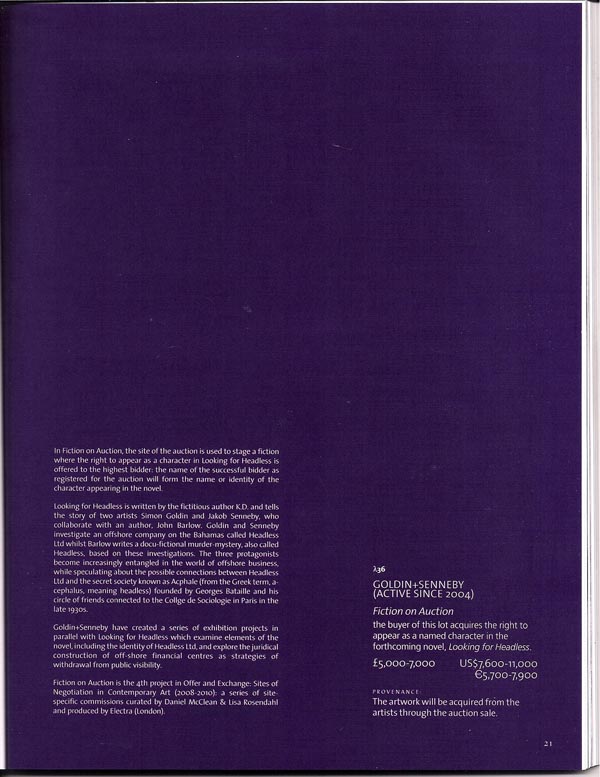
Headless (Fiction on auction)
A staged auction converts authorship and characterhood into tradable rights, exposing how identity, visibility, and narrative agency are produced through contractual and market mechanisms rather than expressive self-presence. By paralleling offshore finance’s juridical “withdrawal” with Bataillean acephalic secrecy and delegated performance, the project critiques contemporary capitalism’s virtual legal architectures and the artist’s strategic disappearance within networked, rhizomatic production.
Read more
[ KADIST ]
Back to top