

A new way to explore
contemporary art and ideas
The future of labor in automated worlds
Artworks depict precarity, invisible labor, and the shifting meaning of work as automation expands.
[ KADIST ]
[ KADIST ]
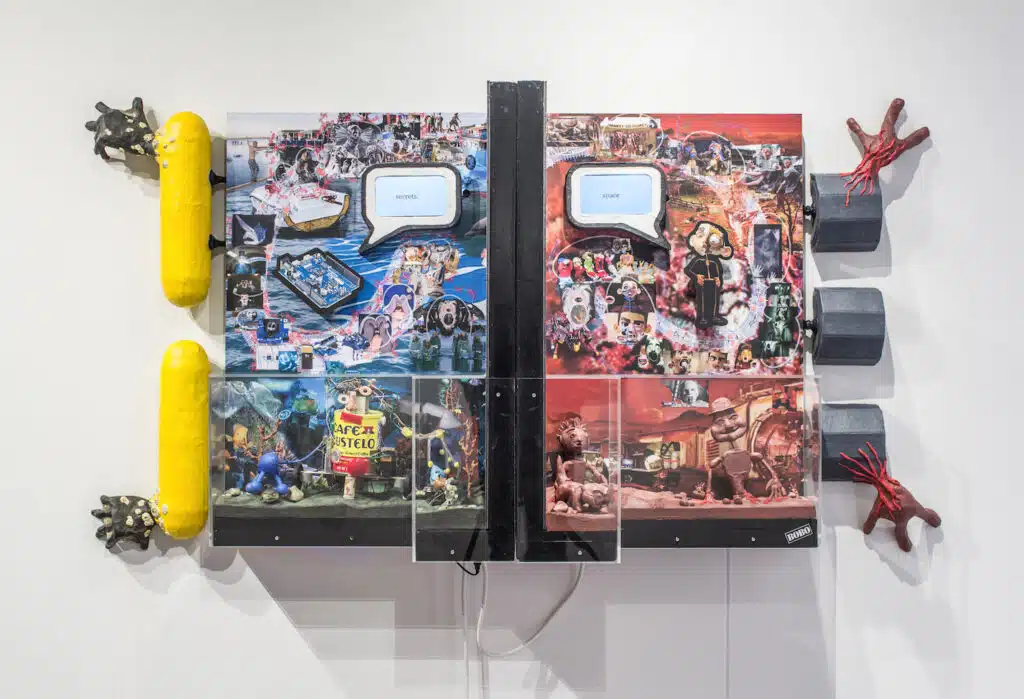
Simon & Gus
Posthuman role-reversal narratives—told through an Arduino board and a stop-motion armature—stage a critique of techno-utopian colony-making (seasteading and Mars settlement) as hubristic projects where tools and infrastructures seize agency, consciousness, and bodily control. The dual-screen, 1000-wpm speed-reading format mirrors accelerationist attention economies, collapsing story into data-flow and framing subjectivity as a contested interface between maker culture, automation, and spectral afterlives of extractive futurism.
Read more
[ KADIST ]
[ e-flux ]
[ e-flux ]
Dear Navigator, Part I
A simulated Mars mission becomes an allegory of late-modern subjectivity: life under total observation, instrumentalized labor, and mediated intimacy collapses the boundary between experiment and performance, producing a split consciousness where agency is indistinguishable from compliance.
By suturing Soviet revolutionary memory to platform temporality (delay functions, cloud afterlives) and a suicide turned into product growth, the text critiques techno-capitalist hypermateriality and data governance as a new political theology that converts grief, desire, and history into managed signals while promising transcendence through escape from gravity.
Read more
[ e-flux ]
[ e-flux ]
[ e-flux ]
Workers and Robots Enter a Factory Canteen
Post-Fordist automation and platform capitalism are framed as a reconfiguration of labor, where workers and robots cohabit the factory’s social spaces while value extraction migrates from the shop floor into data, logistics, and affective time.
Marxian and posthumanist lenses converge to critique how technological “progress” naturalizes dispossession and managerial control, while proposing solidarity and new political imaginaries that contest the human/machine divide and the factory’s evolving regime of discipline.
Read more
[ e-flux ]
[ KADIST ]
[ KADIST ]
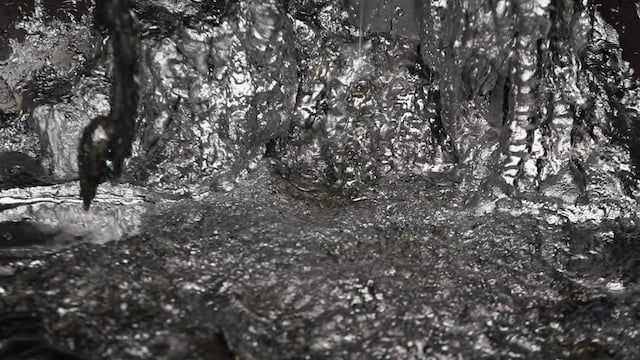
Argentum
Industrial modernization is staged as a self-perpetuating extractive regime in which state-led development, managerial rationality, and technological insufficiency produce both spectacular atmospheric toxicity and economic precarity, binding workers and landscape into a single vicious cycle. Through real-time, fragmented documentary polyphony that triangulates labor, capital, and governance, the work critiques capitalist-industrial modernity’s promise of progress by exposing how the assembly line reorganizes social relations and perception into an “illusory reality” where human agency is subordinated to systemic production.
Read more
[ KADIST ]
Back to top