

A new way to explore
contemporary art and ideas
Intimacy in a mediated world
Artists explore relationships, desire, and vulnerability in an age dominated by screens and algorithms.
[ e-flux ]
[ e-flux ]
Camels vs. Google: Revolutions Recreate the Center of the World
Technological interfaces (Google, social media, live broadcast) are framed as the new sovereign instruments that convert dispersed “users” into Arendtian councils of opinionated citizenship, shifting legitimacy from rulers and parties to networked organizational capacity and media visibility. The text critiques this communicative revolution as symbolically potent yet ideationally thin—able to topple figures through image/word economies and consumer-to-user subject formation, while remaining constrained by geopolitical modernity, fragile democratic models, and unresolved questions of pluralism in the postcolonial Middle East.
Read more
[ e-flux ]
[ KADIST ]
[ KADIST ]
GUILLOTINÆ Wanna Cry, Act Yellow: Break Room
A speculative, multi-channel montage collapses the hierarchy between political news and pop spectacle, treating all media signals as equivalently authoritative to expose how contemporary publics are formed by algorithmic adjacency, affect, and mass devotion to both celebrities and revolutionary icons. By subverting productivity imperatives amid systemic collapse, the work mobilizes feminist and anti-extractive critique through time-warped fabulation and sonic excess, insisting that “normalcy” and futurity are unstable constructs shaped by power, ecology, and collective complicity.
Read more

[ KADIST ]
[ KADIST ]
[ KADIST ]
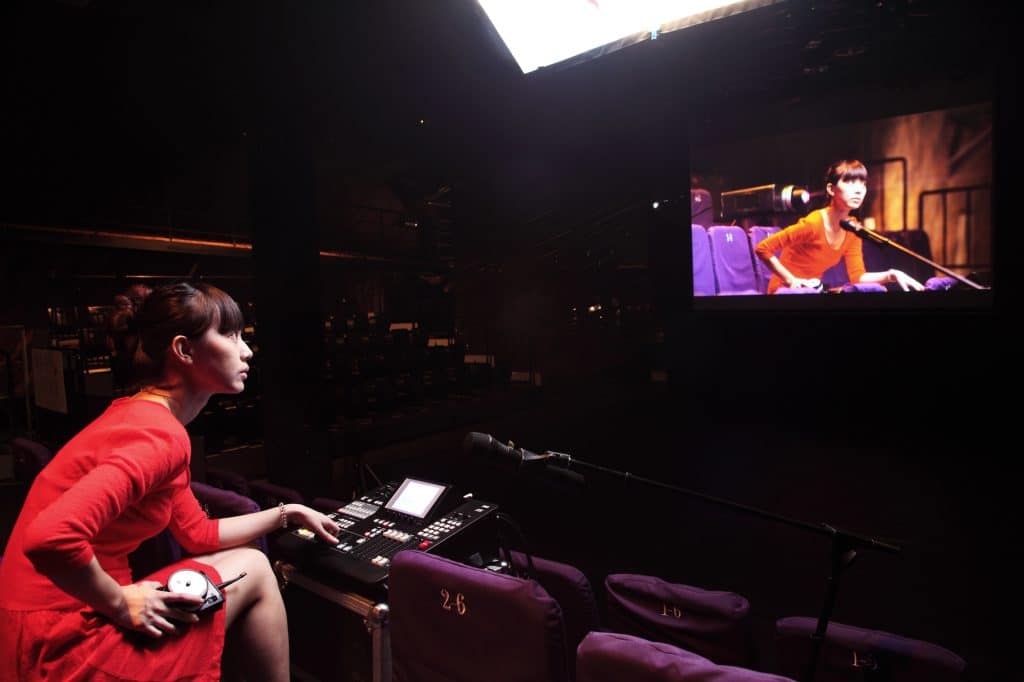
Cinema
A seven-channel “melancholic portrait” of subjectivity as a staged, surveilled performance, where self-choreography under regimes of attractiveness, anxiety, and narcissism erodes any stable claim to authenticity. Intimacy and the mundane are mobilized as constructed “situated realities” that critique social-networked visibility and political control, reframing identity as relational, media-conditioned, and perpetually re-authored rather than singular or given.
Read more
[ KADIST ]
[ e-flux ]
[ e-flux ]
Becoming Tarden — Prologue
Stages an aestheticized infiltration of the Dutch secret service to expose how bureaucratic secrecy and security vetting manufacture subjects, regulate intimacy, and convert personal life into administrable “data” under the alibi of democratic protection. By weaponizing performance, seduction, and self-surveillance, the project critiques the mutual desire between institution and artist—where transparency becomes a managed spectacle and the human “face” of power is produced as an artwork within the apparatus it claims to reveal.
Read more
[ e-flux ]
Back to top