

A new way to explore
contemporary art and ideas
How do artists rewrite dominant historical narratives?
Through reenactment, counter-mapping, and speculative retellings, artists challenge official histories.
[ KADIST ]
[ KADIST ]
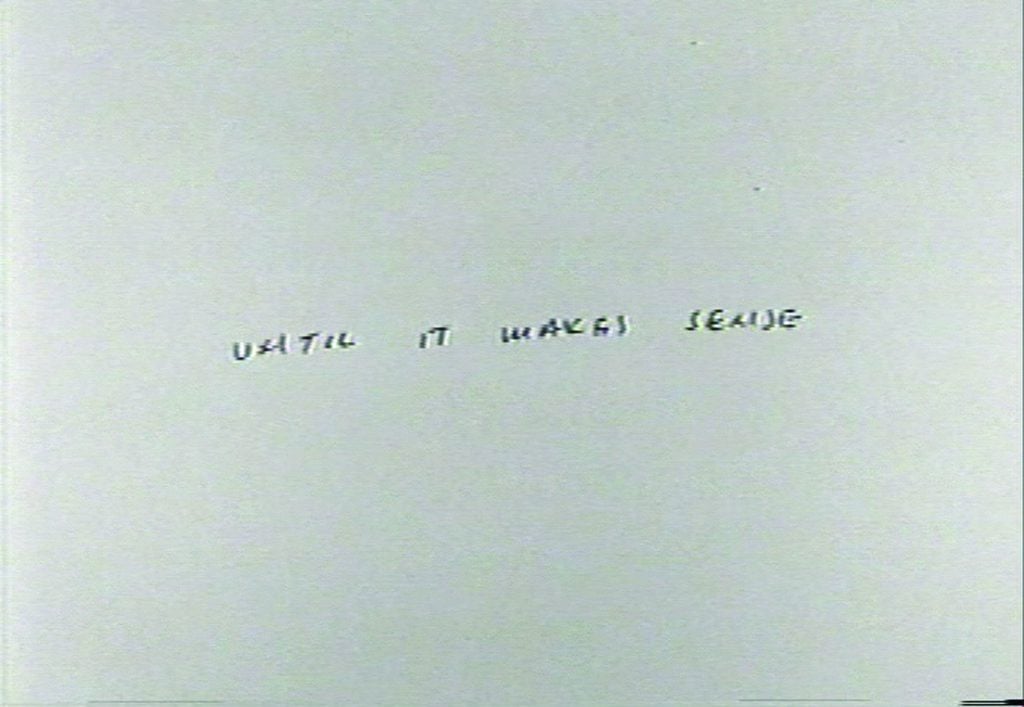
Until It Makes Sense
Conceptual art’s “forgotten” narratives are reactivated through cinematic and archival strategies that treat history as a mutable montage, where reenactment, completion, and fabrication destabilize distinctions between document and myth. Coherence is framed as temporally produced rather than given, legitimizing subjective, sensual observation as a historiographic method while critiquing universal claims to truth, certainty, and linear time.
Read more
[ KADIST ]
[ e-flux ]
[ e-flux ]
The Way of the Shovel: On the Archeological Imaginary in Art
Contemporary art’s “historiographic turn” is framed as a messianic vocation of critique that substitutes archive, excavation, reenactment, and anachronistic media for futurity, seeking ethical redress for what official History and market-driven presentism consign to oblivion.
The archeological imaginary supplies both an epistemology (Benjaminian fragments, Marxist/Bataillean base materialism, museum-display truth claims) and a cultural critique of depoliticized micro-histories and post-ideological fatigue, yet risks becoming a melancholic, potentially reactionary retreat that cannot adequately confront the present or excavate the future.
Read more
[ e-flux ]
[ e-flux ]
[ e-flux ]
Innovative Forms of Archives, Part Two: IRWIN’s East Art Map and Tamás St. Auby’s Portable Intelligence Increase Museum
Historiography is framed as an inherently non-neutral, contested practice in which artists assume archival and museological roles to counter Western-centric canons and local “art-historical falsifications,” producing subjective, participatory tools that expose how documents and narratives are constructed under conditions of postcommunist/postcolonial “double colonization.”
IRWIN’s East Art Map and Tamás St. Auby’s Portable Intelligence Increase Museum mobilize retro-avantgarde strategies, self-institutionalization, and open-ended databases to democratize authorship of history, recover suppressed neo-avant-garde lineages, and reconfigure the ‘Other’ from an object of classification into an active agent of knowledge production.
Read more
[ e-flux ]
[ KADIST ]
[ KADIST ]
Museum of Proletarian Culture, Pop - Stars
A meta-museum installation reframes post-Soviet cultural history as a shifting regime of display, where documentary authority collapses into fiction and the exhibition itself becomes the medium for narrating transitions from late-socialist amateurism to neoliberal creative-class self-fashioning.
Mobilizing Soviet/Marxist museology and Cosmism’s “universal museum,” it critiques art’s conversion into entertainment by reasserting pedagogy and collective memory, foregrounding DIY worker creativity as a democratic counter-model to commodified cultural production.
Read more

[ KADIST ]
Back to top