

A new way to explore
contemporary art and ideas
Climate crisis as a visual language
Artists depict rising seas, burning forests, and disrupted ecosystems not as distant threats but as lived realities that demand new aesthetic and ethical vocabularies.
[ e-flux ]
[ e-flux ]
The Anamorphic Politics of Climate Change
Climate change is framed as an anamorphic political object: apprehended head-on it produces a paralyzing Anthropocene sublime that feeds a Lacanian-Žižekian circuit of jouissance (catastrophe, moralism, “being in the know”) that mirrors and stabilizes capitalist enjoyment and extraction.
A partisan shift in perspective—seeking gaps within the supposed ecological whole—re-centers collective class struggle through infrastructural and institutional interventions (pipelines, museums, anti-sponsorship campaigns) that convert cultural authority into counterpower against fossil-capital and greenwashing.
Read more
[ e-flux ]
[ KADIST ]
[ KADIST ]
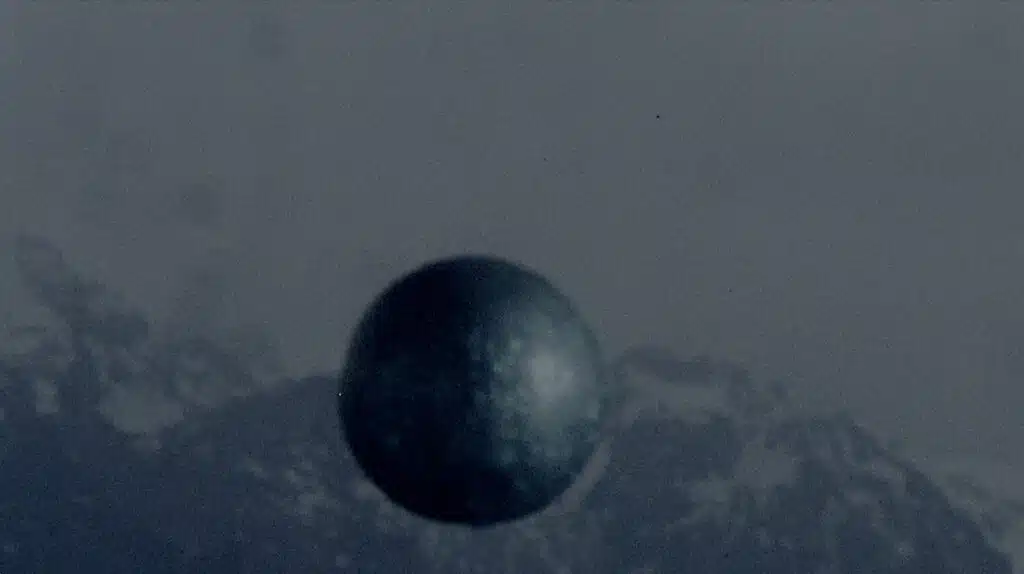
DROPSPIKE
Speculative climate-apocalypse is staged through an unrecordable, naked-eye sphere that exposes the limits of photographic evidence and technological mapping, turning perception itself into the site of ecological warning and ontological uncertainty. By privileging celluloid’s material temporality and invented imaging apparatuses, the work fuses media archaeology with science-fiction and mysticism to critique modern epistemologies, producing a dilated, melancholic time where environmental catastrophe and occult renewal coexist.
Read more
[ KADIST ]
[ KADIST ]
[ KADIST ]
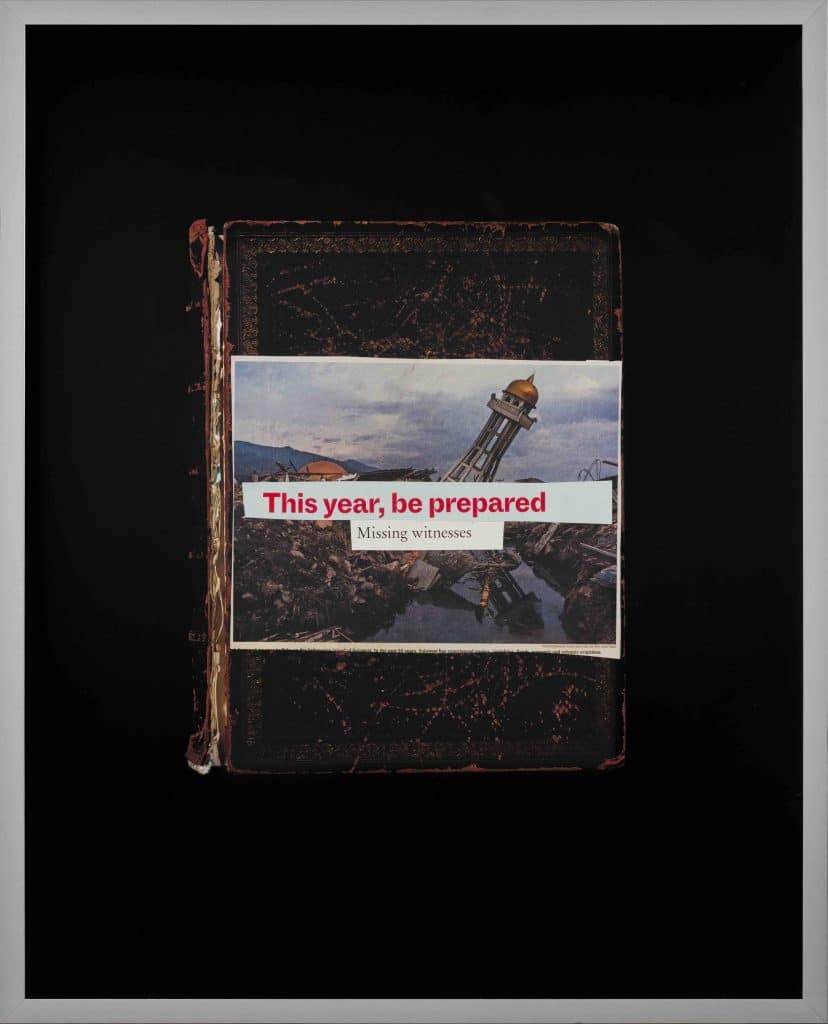
This year: missing witness
A layered collage sutures pandemic-era headlines and climate-disaster imagery to a nineteenth-century Hogarth volume, staging catastrophe as a recurring media-script that binds environmental collapse, political/religious control, and global struggles for racial, Indigenous, and trans sovereignty. By colliding popular news with canonical print culture, the work advances a decolonial critique of hegemonic modernity—exposing historical amnesia and complicity while showing how visual culture disciplines interpretation through capital, spectacle, and racialized narratives of crisis.
Read more
[ KADIST ]
[ e-flux ]
[ e-flux ]
Twenty-One Art Worlds: A Game Map
A satirical, game-like cartography of post-pandemic “art worlds” renders the contemporary art system as a set of machinic, bureaucratic, and extractive ecologies—where bodies, affects, and images are processed into value through debt, spectacle, war, and platform governance. By proposing “composting” as both critique and method, it mobilizes posthuman and institutional-critique frameworks to expose how decentralization, tokenization, and democratized participation often reproduce feudal capture and states of exception, while still gesturing toward reparative world-building beyond the market’s endgames.
Read more

[ e-flux ]
Back to top