
A new way to explore
contemporary art and ideas
Can abstraction carry political meaning?
Far from being neutral, abstract forms often encode conflict, trauma, or refusal, inviting viewers to rethink the relation between aesthetics and politics.
[ KADIST ]
[ KADIST ]
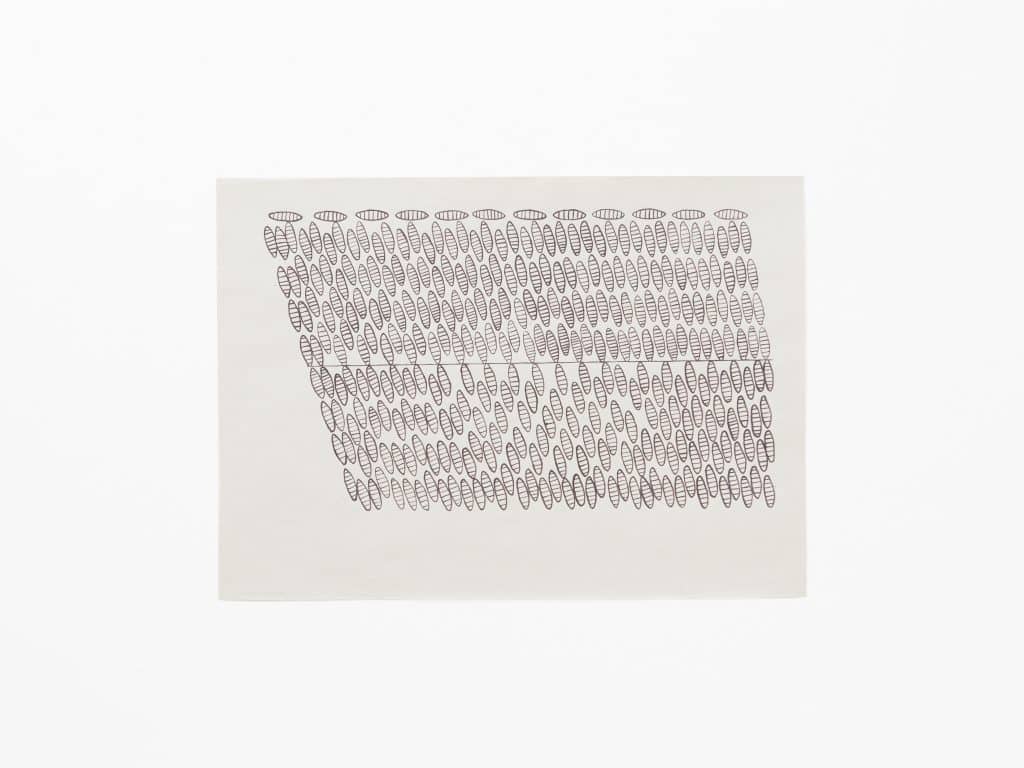
Wateoma husipe / Larvas de oruga / Caterpillar larvae
Yanomami abstraction is framed as a process of formal depuration that translates lived Amazonian cosmology into drawings that privilege structure, rhythm, and trace over mimetic representation. By collapsing the nature/culture divide and refusing Western genealogies of abstraction, the work asserts Indigenous contemporaneity while functioning as a practice of cultural memory and epistemic protection across territorial and urban contexts.
Read more
[ KADIST ]
[ e-flux ]
[ e-flux ]
The Sun of the Colored Peoples: Edival Ramosa in the Diaspora
Geometric abstraction is reframed as a diasporic, racialized language through Edival Ramosa’s “new totemic construction,” positioning totemic form, vivid chromatics, and environmental scale as sign-systems forged across the Black Atlantic rather than within Brazil’s dominant (white) constructive canon. Mobilizing “imaginary diaspora,” Black abstraction discourse, and Fanon/Torres-García as conceptual anchors, the text critiques nationalist art history and Eurocentric universalisms by reading Ramosa’s reflective, spatially partitioned installations as allegories of exile, nonreturn, and the structural division of colonial modernity.
Read more

[ e-flux ]
[ e-flux ]
[ e-flux ]
Intangible and Concrete: Notes on Architecture and Abstraction
Capitalism produces “concrete abstractions” in which money, labor, measurement, and representation become real social forces, collapsing the opposition between intangible concepts and tangible objects; architecture exemplifies this condition because built form is inseparable from abstract systems of design, calculation, codes, and finance. From Renaissance perspective and the rise of the architect as intellectual labor to Cerdà’s urbanization as a total infrastructural-epistemic apparatus, abstraction is shown to materialize as spatial order, demanding an architectural practice that renders these conditions legible and contestable rather than treating abstraction as mere style.
Read more
[ e-flux ]
[ KADIST ]
[ KADIST ]
Re: definição de projeto arquitetônico 2 (Re: Definition of Architectural Project 2)
Modular, concrete-block-based drawing becomes a proposition for architecture as an open, processual “re-definition,” framing urban form as unfinished, potentially infinite, and politically charged rather than resolved design. Mobilizing Situationist dérive alongside critiques of housing, property development, and spatial constraint, the work asserts artistic agency in social imagination while revisiting Brazilian Modernism and Neoconcretism as contested historical frameworks for public/private life.
Read more

[ KADIST ]
Back to top