

A new way to explore
contemporary art and ideas
[ KADIST ]
[ KADIST ]
Swipe
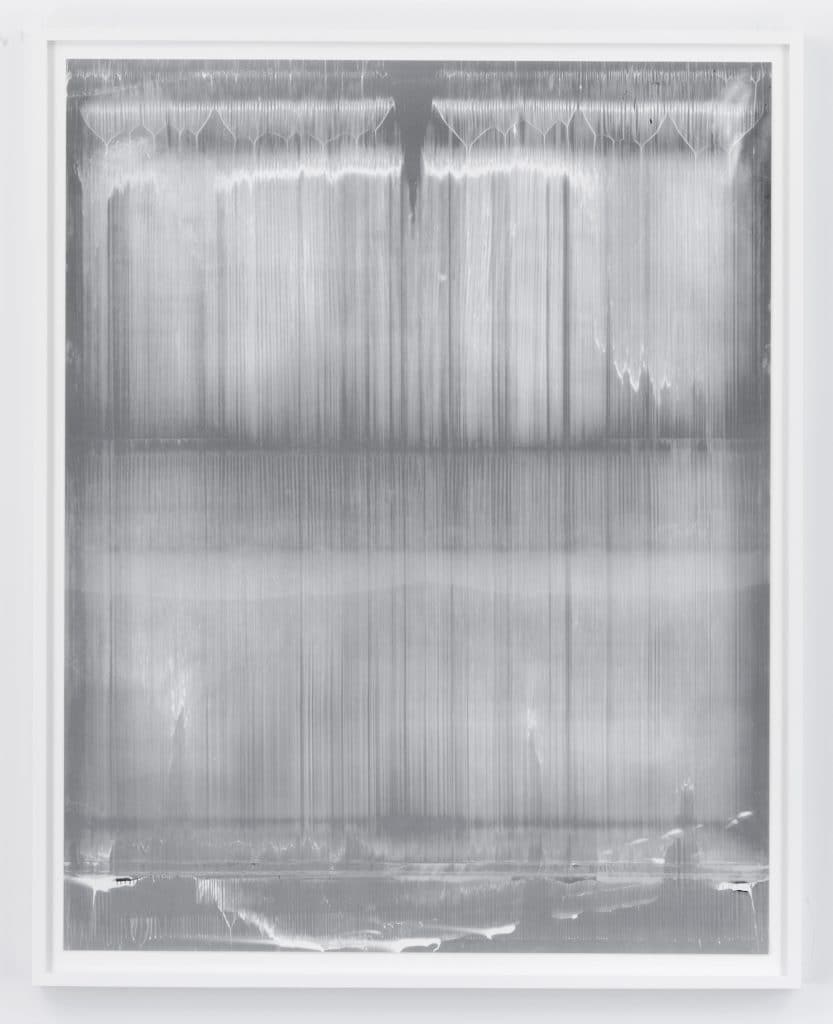
Quinlan’s studio-based abstractions treat photography as a self-reflexive system, redirecting the camera from documenting the external world toward interrogating its own material conditions—light, chemistry, optics, reflection, and shadow. By “photographing photography,” the work aligns with post-medium and conceptual critiques of indexical realism, foregrounding process and apparatus as the site where meaning is produced.
Read more
[ KADIST ]
[ e-flux ]
[ e-flux ]
Incomplete Messengers: Notes on Heavy Equipment
Photography is framed as a time-shifting, materially fragile relay system in which lesbian feminist image-making (1970s–90s) emerges through messy collectivities, DIY distribution, and archival dispersal, while the camera’s presence inside images exposes the labor, mediation, and partiality of historical record. Against nostalgia, the text critiques identity-category consolidation and captioning/credit regimes through intersectional and Trans* analytics, foregrounding how whiteness, anonymity, and trans-exclusion haunt “lesbian photography” even as these images remain vital sites for re-reading power, consent, and community memory in the present.
Read more

[ e-flux ]
[ e-flux ]
[ e-flux ]
We Stopped Taking Photos
Photography is framed as structurally entangled with violence—not only in what images depict but in the regimes of capture, surveillance, evidence, and circulation that make images legible to state power, occupation, and racialized policing, while also rendering systemic and legal violence largely unphotographable.
Against the fantasy of the image as transparent truth or emancipatory proof, the text critiques how images become instruments of propaganda and control, proposing refusal (not producing/circulating) and sustained critical pedagogy as ethical-aesthetic strategies for rethinking photography’s complicity and limits.
Read more

[ e-flux ]
[ KADIST ]
[ KADIST ]
L’Anabase de May et Fusako Shigenobu, Masao Adachi et 27 Années sans Images (The Anabasis of May and Fusako Shigenobu, Masao Adachi, and 27 Years without Images)
Interrogates an image-saturated culture by centering political histories that lack visual representation, using testimony, memory, and the reconstruction of “missing images” to expose how documentation, indexicality, and false recollection shape what can be known.
Tracks the passage from avant-garde cinema and fûkeiron’s landscape critique of power to propaganda and armed struggle, probing biopolitical entanglements between aesthetics and militancy where media spectacle, scripting, and the camera’s logic migrate into terrorism’s performative theater.
Read more

[ KADIST ]
[ KADIST ]
[ KADIST ]
Holes in White and Holes in Cream with Front Light on Left
A rigorously methodical investigation of light treats photography and film as self-reflexive systems, using perforated backdrop paper and a single spotlight to foreground the medium’s material conditions—surface, shadow, and the constructed illusion of space. Bridging painterly abstraction with post-minimal/conceptual concerns, the work stages perception as contingent on apparatus and viewing situation, where slight asymmetries (tone, angle, illumination) become the critical content.
Read more

[ KADIST ]
[ e-flux ]
[ e-flux ]
Attachment:
A Farocki-inflected poetics of the dispositif reframes film-to-gallery translation as an inquiry into narrative modes (syuzhet over fabula), diagrammatic thinking, and the inseparability of theory and practice, making images legible as institutional scripts rather than objects for hermeneutic interpretation. Through motifs of circles, doubling, and “nothing-to-hide” transparency, the text links cinematic form to critiques of capitalism, pedagogy, and neoliberal management culture, while staging attachment as a material-epistolary method (the empty email with an attached letter) for transmitting tools of seeing across generations.
Read more
[ e-flux ]
[ e-flux ]
[ e-flux ]
A Hitherto Unrecognized Apocalyptic Photographer: The Universe
Relativity’s event horizon is theorized as a cosmic photographic apparatus that freezes and flattens bodies into “camera-less” images, reframing photography’s nostalgia as an intuition of irreversible ontological loss rather than mere temporal disappearance. By splicing physics with Bergson/Deleuze on memory, Leibnizian monadology, and modernist “radical closure” in cinema/literature (Robbe-Grillet, Lynch, Kubrick) and painting (Bacon), the text treats such irruptive photographs as mixed-media apocalyptic thresholds where reference frames split, memory collapses, and subjectivity becomes alien to itself and others.
Read more
[ e-flux ]
[ KADIST ]
[ KADIST ]
What remains is future
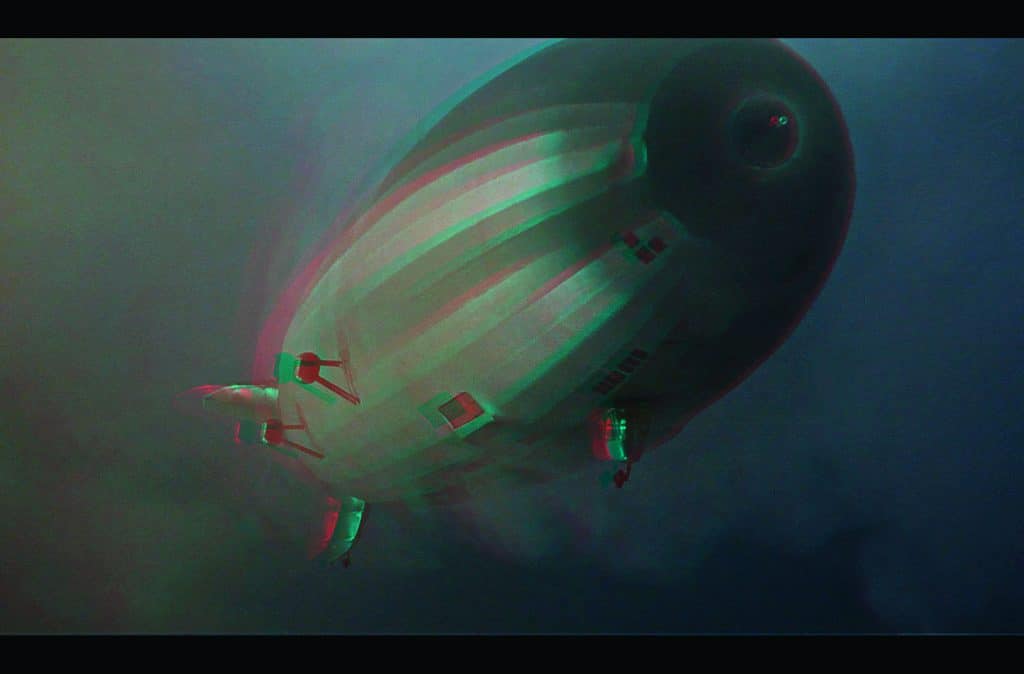
Reactivating the Hindenburg disaster as a foundational media spectacle, Montaron probes how modernity’s “futuristic-obsolete” technologies become mythic images (in a Barthesian sense) that haunt collective consciousness through cinematic and journalistic diffusion. By foregrounding anaglyph artifice, blur, looping material supports, and temporal “ruptures” (Didi-Huberman), his works suspend narrative closure to produce haptic, hypnotic scenes where perception, memory, and the fabrication of images are inseparable.
Read more
[ KADIST ]
[ KADIST ]
[ KADIST ]
Baby Shoes, Never Worn
Iterative, in-camera rephotography turns a childhood relic into a palimpsest where memory is mediated, estranged, and multiplied, echoing Hemingway’s six-word tragedy to stage absence and loss through still life. By fusing genre convention with an algorithmic, programmerly procedure that mimics digital manipulation without post-production, the work frames photography as a recursive mode of thought and a critique of indexical authenticity.
Read more

[ KADIST ]
[ e-flux ]
[ e-flux ]
The Silence of the Lens
A shift from lens-based photography’s contingent co-production of world and author toward computational image regimes (3-D, scanning, algorithmic capture) collapses the gap between perception and signal, replacing modern “magic” and emancipation with total fabrication, security logics, and a return of the tableau/masterpiece as ideology. Drawing on Flusser, Baudrillard, and psychoanalytic distinctions between Vorstellung and Bewusstsein, this condition is framed as a culturally generalized madness in which subjects are deluded into believing they still contribute a viewpoint, even as automated systems pre-compose memory-conforming images and render the lens—and with it photographic authorship—silent.
Read more
[ e-flux ]
[ e-flux ]
[ e-flux ]
The Blood of the Victim: Revolution in Syria and the Birth of the Image-Event
Violent photography is framed as an ethical and ontological machine that converts private suffering into a public “course of death,” producing an image that outlives the subject as destiny while leaving intact the political structures that administer famine and massacre. Syrian revolutionary media ruptures this paradigm by collapsing witness and victim into a single figure, making the recording of one’s own death an image-event that seizes interpretive sovereignty from global broadcasters and exposes the spectator’s moral impotence before a regime of necropolitical property.
Read more
[ e-flux ]
[ KADIST ]
[ KADIST ]
The Pixelated Revolution
A lecture-performance frames the Syrian revolution’s mobile-phone images as a new political optics in which low-resolution, rapidly circulating footage becomes both evidence and mobilizing force within networked publics. By blending fiction with analysis, Mroué interrogates the artist’s ethical responsibility amid post–civil war amnesia, exposing how mediated visibility, viral communication, and suppressed histories co-produce contemporary political reality.
Read more

[ KADIST ]
Back to top